Investors reading MAIA The Seven vs Century Immencity are really weighing two theories of value: scarcity in an established South Bengaluru heritage pocket, and scale in a North Bengaluru corridor with airport and metro momentum. Both projects target possession in 2031 and both aim at high-net-worth buyers. This investor-focused comparison separates verified numbers from assumptions.
Why Both Projects Appeal to Bengaluru’s High-Net-Worth Investors
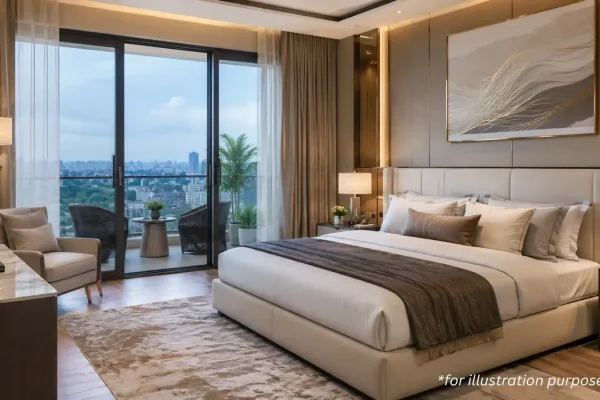
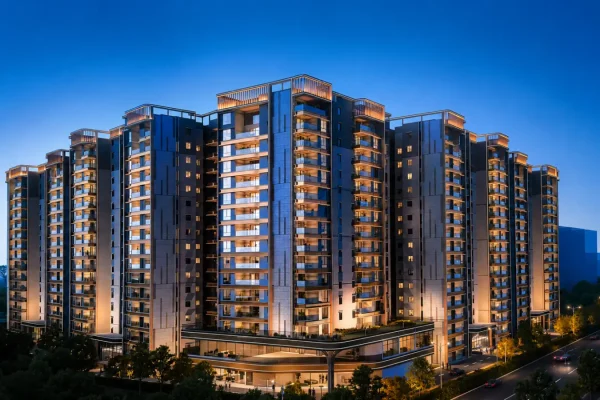
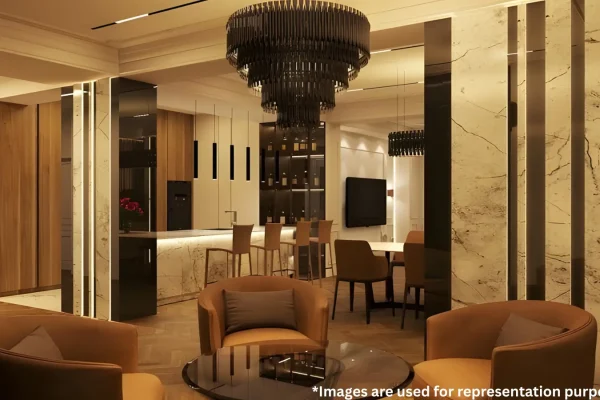
Both projects target households that value space, privacy and brand. MAIA The Seven offers 128 ultra-luxury 4 BHK homes, from ₹13.5 Cr onwards, in one of Bengaluru’s most land-constrained neighbourhoods. Century Immencity’s Codename Blue Moon offers 334 Neo Luxe Residences, from ₹4.25 Cr for apartments and ₹14 Cr for penthouses, within a 50-plus-acre campus.
Each is backed by a developer that pitches design as a differentiator: MAIA Estates, founded in 2016 by Mayank Ruia, and Century Real Estate, which has spent 50 years building in Bengaluru. The ticket sizes differ sharply, so the investor pools differ too, with Century accessible to a wider range of buyers and MAIA aimed at a narrower, higher-net-worth group. That makes MAIA The Seven vs Century Immencity a comparison of two audiences as much as two projects.
Scarcity in the South Versus Scale in the North
Basavanagudi’s investment case rests on scarcity. Most premium inventory there comes from small bungalow redevelopments of 10 to 50 units, so a 3.7-acre, 128-unit project with a 4,419 sq. ft. minimum size is virtually unprecedented. The price of that rarity is about ₹29,000 per sq. ft., well above the nearest comparable, Prestige Greenmoor, at roughly ₹22,000.
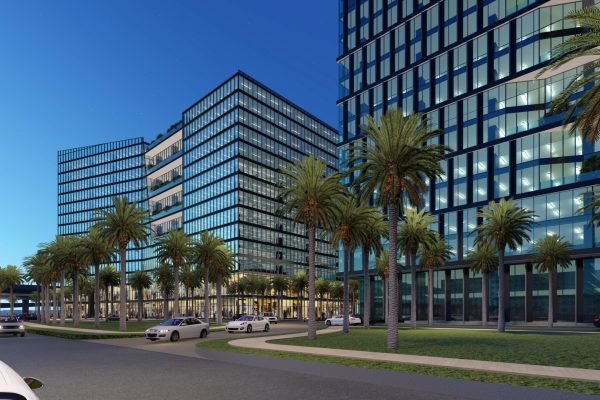
Jakkur’s case rests on scale and infrastructure. Century argues that 50-plus acres, 11 million sq. ft. and a 3,000-acre land bank create a district rather than a building. Its apartments at about ₹19,540 per sq. ft. sit roughly 22% above the best-quoted local comparable, while penthouses sit above the segment. In MAIA The Seven vs Century Immencity, scarcity meets scale. Both carry a premium, but each justifies it differently.
Rental Yield and Appreciation Numbers You Can Actually Verify
Rental benchmarks are identical on paper: 3.5 to 4% a year of property cost for semi-furnished homes and 4 to 4.5% for furnished ones. On MAIA’s ₹13.5 Cr entry home, that implies roughly ₹3.94 lakh to ₹5.06 lakh per month. On Century’s apartments it implies roughly ₹1.24 lakh to ₹1.88 lakh, and a ₹14 Cr penthouse implies about ₹4.08 lakh to ₹5.25 lakh.
On growth, Jakkur has recorded about 19.4% one-year, 69% three-year and 102% five-year appreciation, while Basavanagudi’s outlook is 8 to 10% in stable conditions, with MAIA modelling 8 to 12% as a base case. These are benchmarks, not guarantees. Leveraged buyers should note that yields fall short of the cost of capital, so appreciation does the heavy lifting.
Key Risks Every Investor Should Weigh Before Booking
In MAIA The Seven vs Century Immencity, each project carries distinct risks that an investor should price in before booking.
- MAIA: no established resale benchmark at ₹29,000 per sq. ft. in Basavanagudi, so buyers underwrite price discovery.
- MAIA: a thin resale pool, given 128 units and a single high-ticket typology.
- MAIA: a shorter developer record, with two delivered residential projects, 27 Summit and Pelican Grove.
- Century: a premium that depends on the business district, retail and hospitality components, which are phased and not yet built.
- Century: Blue Line metro timelines, with Yelahanka and Jakkur Cross stations targeted for around 2027, which have historically slipped in Bengaluru.
- Both: possession in 2031, so construction-linked payments, interest costs, floor rise, PLC, stamp duty and GST all need modelling.
Ask both developers for the full cost sheet before comparing returns.
Our Balanced Verdict for Different Kinds of Luxury Buyers
For long-horizon end-users who prize heritage, privacy and 4 BHK scale, MAIA The Seven is the more focused play, accepting a premium for a product category that does not otherwise exist in Basavanagudi. For buyers who want a lower ticket, a broader choice of formats and exposure to an airport-corridor growth story, Century Immencity is the more flexible entry.
Neither is a cash-flow asset, since yields trail borrowing costs. Both reward patience, careful reading of the cost sheet and independent verification of approvals. The honest verdict on MAIA The Seven vs Century Immencity is that they are not direct substitutes; they serve different goals, budgets and risk appetites. Match the project to your time horizon first, then to your budget. Neither choice should be rushed.